This site uses cookies so that we can provide you with the best possible user experience. Cookie information is stored in your browser and performs functions such as recognizing you when you return to our website and helping our team understand which areas of the site you find most interesting and useful.


1. The Telmont Champagne Cellars | A Commitment to Organic Champagne
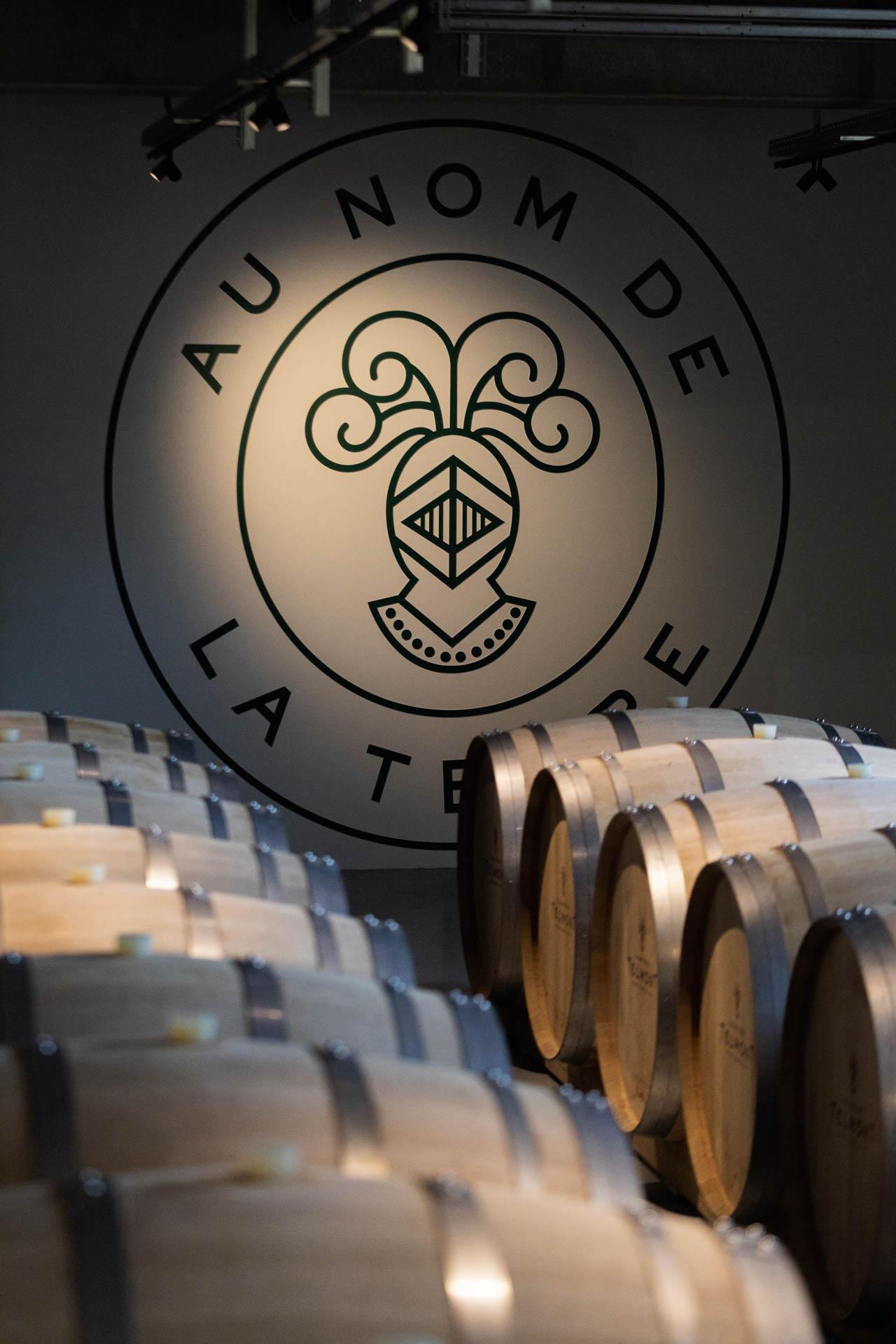
Located in Damery, in the Marne Valley, the Champagne Telmont house stands out as one of the finest Champagne cellars to visit for those seeking an experience firmly focused on biodynamic Champagne and sustainable viticulture, without compromising on the quality of its cuvées. Founded in 1912 and passed down through four generations of winemakers, the house has been working since 2021—through its “Au Nom de la Terre” initiative—to convert its vineyards to organic champagne production and regenerative agriculture. The goal: 100% certified vineyards by 2031 (70% to date) and carbon neutrality by 2050, without resorting to carbon offsets.
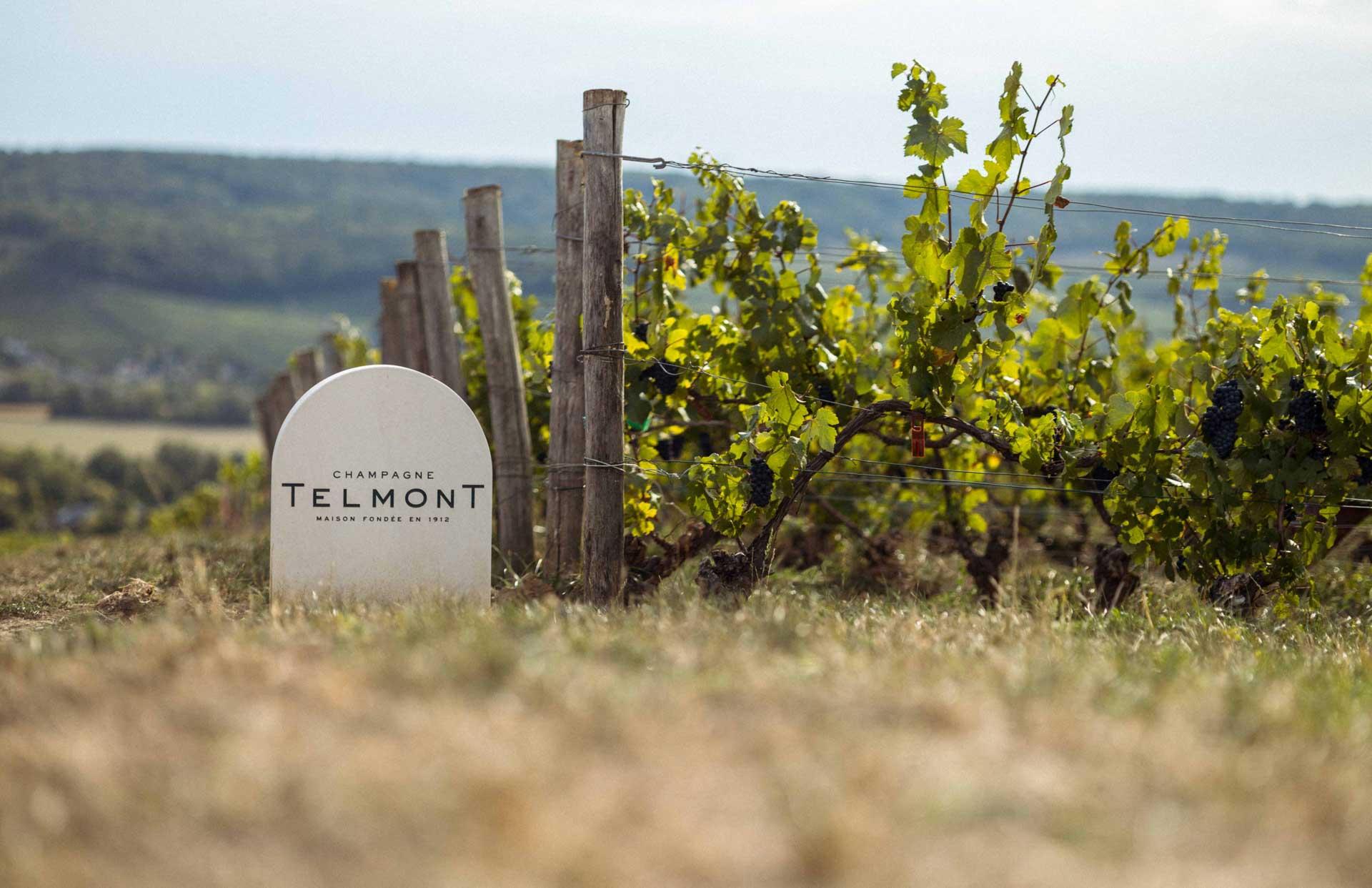
This commitment is also reflected in concrete actions: eliminating cellophane and unnecessary packaging, making bottles lighter to reduce the carbon footprint, and obtaining B Corp certification in 2023—a first for a Champagne house. Leonardo DiCaprio, a longtime advocate for environmental issues, has been supporting the house’s transformation since 2020.
A Champagne house worth visiting for its commitment to organic farming
The tour, in the heart of the village of Damery, offers access to the vineyards in the process of converting to organic farming, the cellars, and every stage of the winemaking process. It’s an opportunity to gain a concrete understanding of what it means to produce an extra-brut or biodynamic Champagne at the scale of a historic house, and to appreciate how Telmont’s environmental commitments shape every stage of winemaking.
A champagne tasting right next to the vineyard
The tour continues with a guided tasting of several cuvées, designed for enthusiasts seeking an authentic tasting experience rather than a formal one. Here, you’ll discover Telmont’s unique balance between Champagne tradition, oenological excellence, and respect for nature—a hallmark that sets the house apart among the region’s most committed Champagne houses and makes it a top choice for a wine-tasting weekend in Champagne.
Champagne Telmont
1 avenue de Champagne, 51480 Damery
Plan your visit to the Telmont Champagne cellars: fr.champagne-telmont.com
2. The Champagne Drappier Cellars | A Long History Dedicated to Quality
A family-owned house for eight generations, Champagne Drappier, based in Urville in the Aube department, is distinguished by its 12th-century Cistercian cellars, founded by Saint Bernard of Clairvaux. Located in the heart of the Côte des Bar since 1808, the estate is now run by the Drappier family, who are committed to authenticity and natural winemaking in the pursuit of a great Champagne.
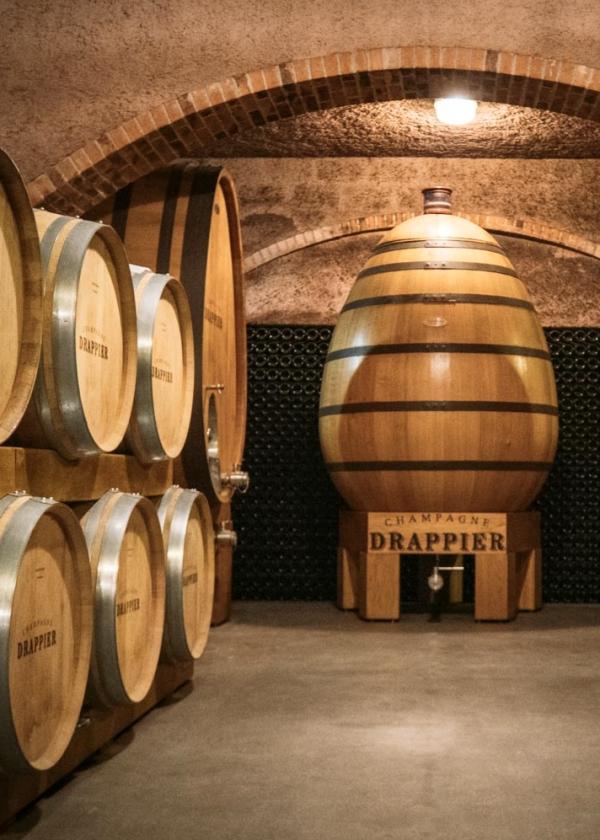
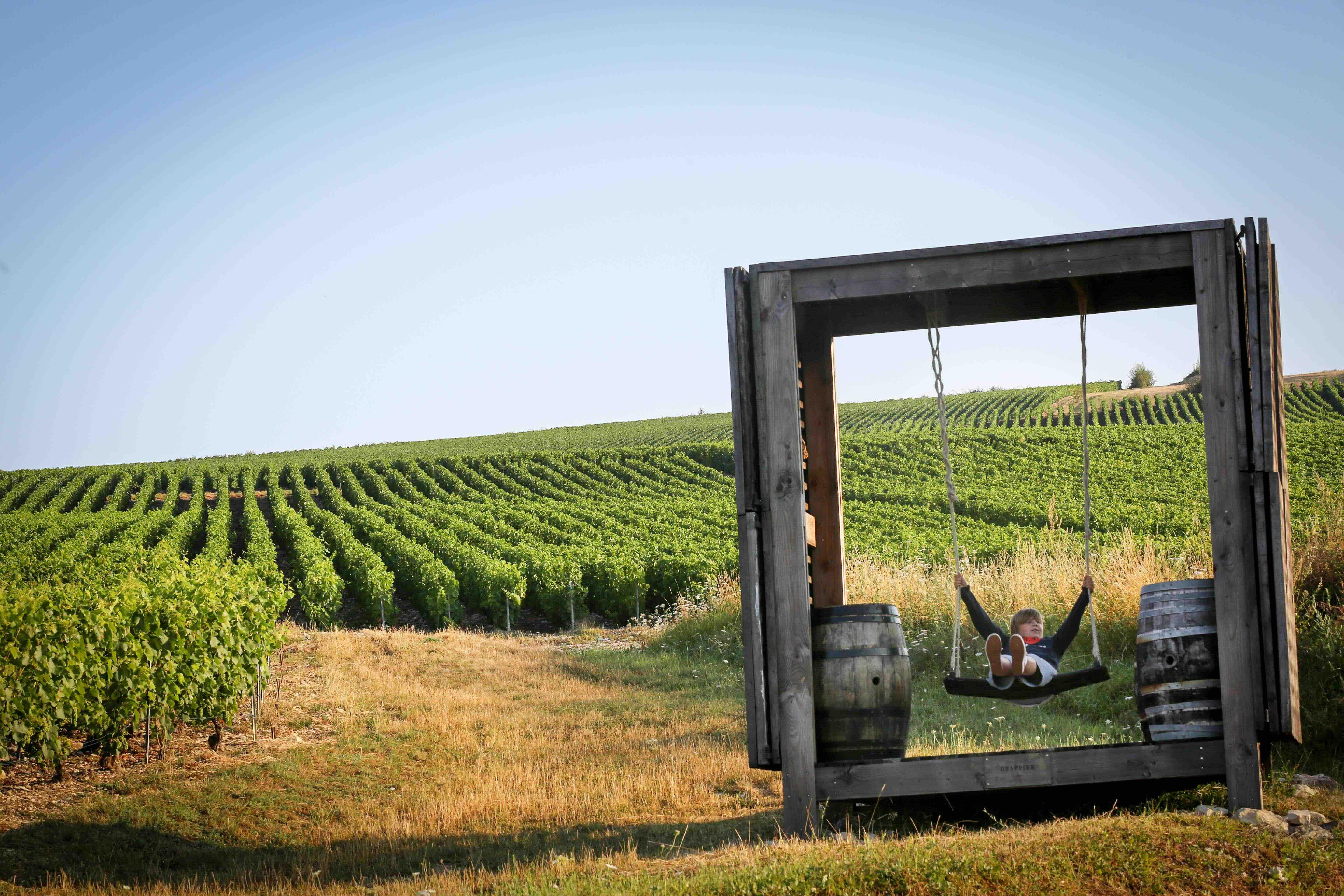
The house’s unique style, characterized by elegance and purity, is based on practices such as the absence of filtration and the minimal use of sulfur and dosage. Certified organic, the Drappier vineyard produces grapes with rich aromas, balanced by a beautiful minerality. Its Kimmeridgian Jurassic soils bring out the best in Champagne’s iconic grape varieties—with a predominance of Pinot Noir—while also cultivating rare varieties such as Petit Meslier, Blanc Vrai, and Arbanne.
Deeply respectful of the environment and the unique characteristics of each grape variety, Hugo Drappier crafts precise and authentic blends. A pioneer of “brut nature” Champagnes produced through sustainable viticulture, he also crafts his own dosage liqueur with great care to enhance his other cuvées.
In the magnificent cellars of Urville, rare and exceptional bottles mature in silence, echoing the history and prestige of the house. A quality that even captivated General De Gaulle, for whom Champagne Drappier became an indispensable choice.
Champagne Drappier
14 rue des Vignes, 10200 Urville
Guided tour with tasting, 26 euros per person
Plan your cellar tour on the website
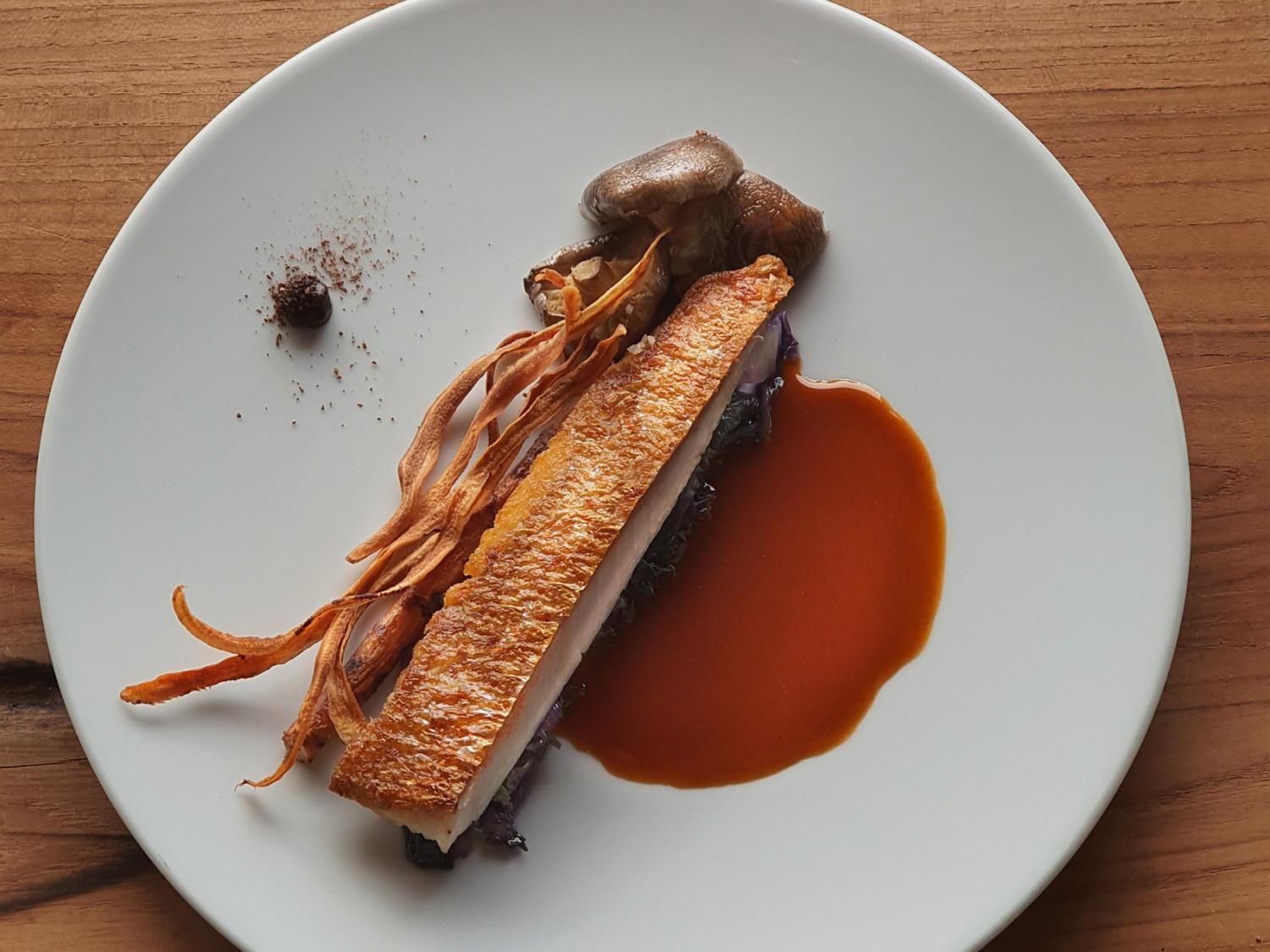
If you’re passing through the region, be sure to stop by Le Garde Champêtre, one of the best restaurants in the area. Housed in an abandoned train depot, this restaurant sources its ingredients from its own nearby organic farm. The dishes are prepared daily by Japanese chef Kazuya Miyashita, using ingredients from the harvest, and served in the summer on the terrace overlooking the vegetable garden and in the winter by the fireplace, which warms the entire single room that makes up the venue. A must-visit stop on your next tour of the Champagne cellars.
Le Garde Champêtre
50 route des Riceys, 10250 Gyé-sur-Seine
Set menus: 35 euros (weekday lunch) and 55 euros (Saturday lunch). Dinner menu: 80 euros
Restaurant’s official website
3. The Joseph Perrier Cellars | Gallo-Roman cellars listed as a UNESCO World Heritage Site
In Châlons-en-Champagne, the Joseph Perrier house is one of those names that embody a story of family, terroir, and tradition. Its origins date back to the late 18th century. Very quickly, the house established itself in the champagne market and forged a style rooted in quality, authenticity, and mastery of the art of champagne-making. Over the generations, Joseph Perrier has strengthened its local roots while expanding its reach far beyond the Champagne region. Its prestige was further enhanced by the “Cuvée Royale” distinction conferred by Queen Victoria and King Edward VII—a title that remains an integral part of its identity.
.jpeg?itok=5BC7WoYg "Joseph Perrier")
The Cuvée Joséphine continues this family history and heritage to this day. But one of the house’s greatest assets also lies in its historic cellars, which visitors can explore during tours. Stretching over five kilometers, these Gallo-Roman cellars carved into the chalk represent an exceptional heritage. Located at ground level, they offer ideal natural conditions for aging champagnes, with a moderate and stable temperature. The bottles rest there for at least three to five years, in an environment that fully enhances the expression of the cuvées.
Called “Inside Our Historic Cellars” , the tour takes visitors through part of this remarkable site and provides a deeper understanding of the key stages in champagne production: the grape harvest, pressing, fermentation, secondary fermentation, aging, and finally, disgorgement and dosage. Lasting 1 hour and 15 minutes, the tour is offered in French and English (German and Spanish upon request), with several options depending on the level of detail desired, ranging from the “1825 Tour” to the “Royal Tour.”
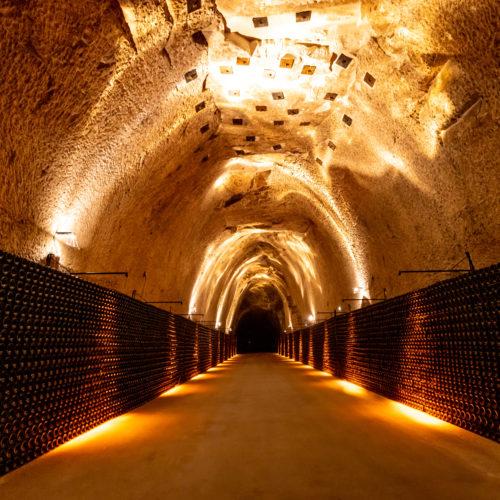
One option also allows visitors to discover four cuvées during a blind tasting, while a version tailored for ages 7 to 17 is also available. These initiatives were recognized in 2022 with the Pierre Cheval Prize, which commended the house’s commitment to preserving its cellars, which have been listed as a UNESCO World Heritage Site since 2015.
The Joseph Perrier Cellars
69 avenue de Paris, Châlons-en-Champagne
Prices starting at 27 euros; children (ages 7–17): 12 euros
Open March through October 7 days a week and November through February 6 days a week (except Sundays)
Plan your visit: josephperrier.com
4. The Pommery Champagne Cellars | The Most Artistic
The cellars of the House of Pommery owe their existence to the visionary boldness of Madame Pommery. In 1868, Monsieur Pommery’s widow undertook what was then considered “the project of the century” in Reims: transforming ancient Gallo-Roman chalk quarries, which had been left abandoned until then, into impressive champagne cellars. More than sixty quarries were thus connected by nearly 18 kilometers of tunnels, at a depth of about 30 meters, under ideal storage conditions, with a constant temperature of 10 °C and a humidity level close to 98%.
But the uniqueness of the site lies not only in its spectacular dimensions. As an art enthusiast, Madame Pommery also commissioned the sculptor Gustave Navlet to adorn the shafts with bas-reliefs carved directly into the chalk. Even today, these works engage in a dialogue with contemporary art through the “Pommery Experiences” , exhibitions held in the cellars since 2002. The tour thus takes the form of a timeless stroll, moving from Gallo-Roman heritage to monumental sculptures and contemporary creations.
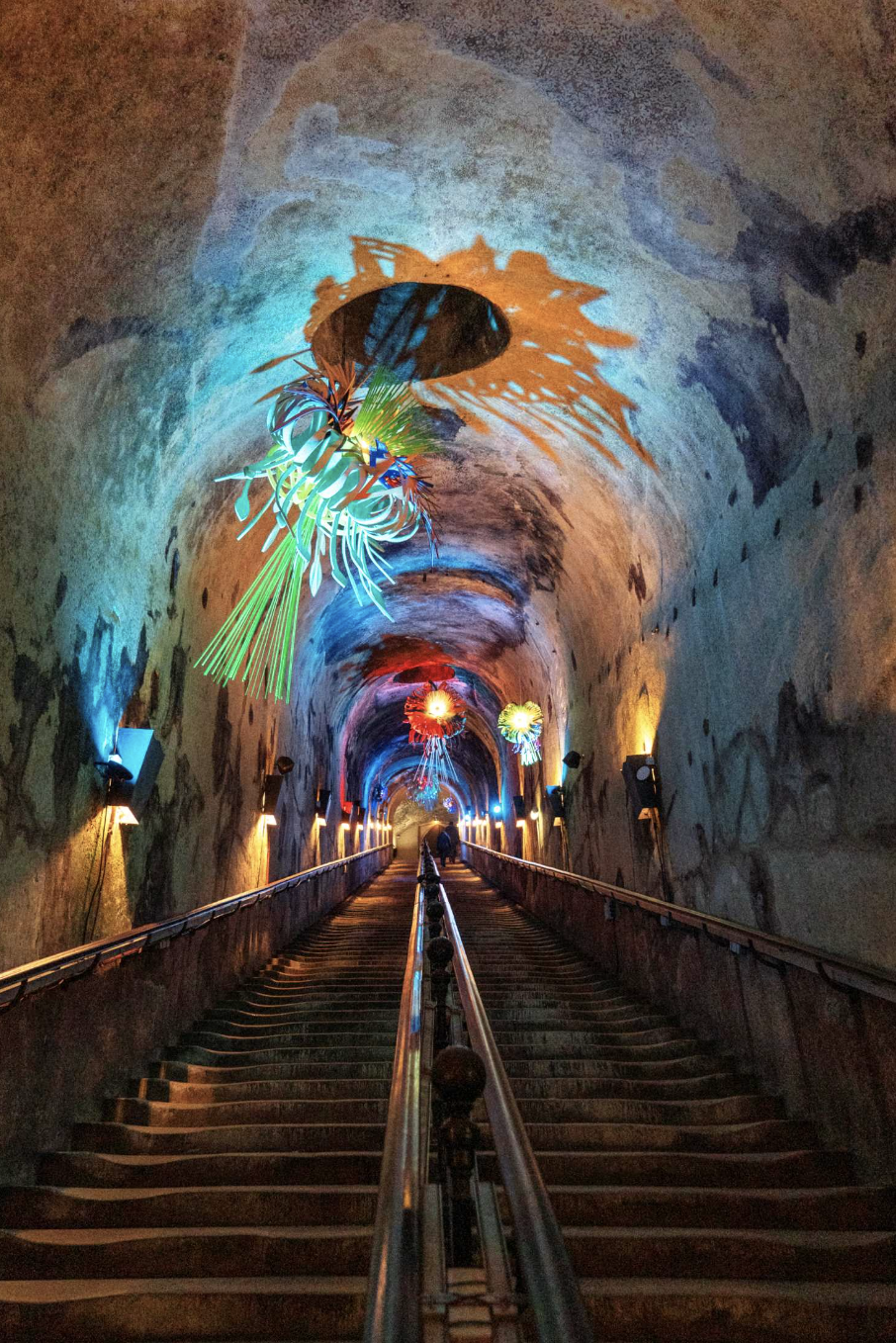
This commitment to excellence is also reflected in the house’s wines. At Pommery, the style is rooted in natural elegance, precise blends, and the quality of the crus. From the Brut Royal, made from nearly forty different crus, to the Cuvée Louise, crafted from three exceptional grands crus, each champagne expresses a refined vision of the Champagne region. Under the direction of cellar master Clément Pierlot, the blending process perpetuates the house’s signature style year after year, followed by a long aging period in the cellars that allows the aromas to gain complexity and depth.
The estate spans 50 hectares in Reims and is also home to Clos Pompadour, 25 hectares of vineyards enclosed within the estate’s walls, which produce a rare cuvée available exclusively in magnum bottles. Adding to this already exceptional tour is a visit to the Villa Demoiselle, a masterpiece blending Art Nouveau and Art Deco styles. Restored with passion over nearly four years, this residence now reveals stained-glass windows, painted decorations, and furniture designed by the greatest names of the era, from Majorelle to Gallé.
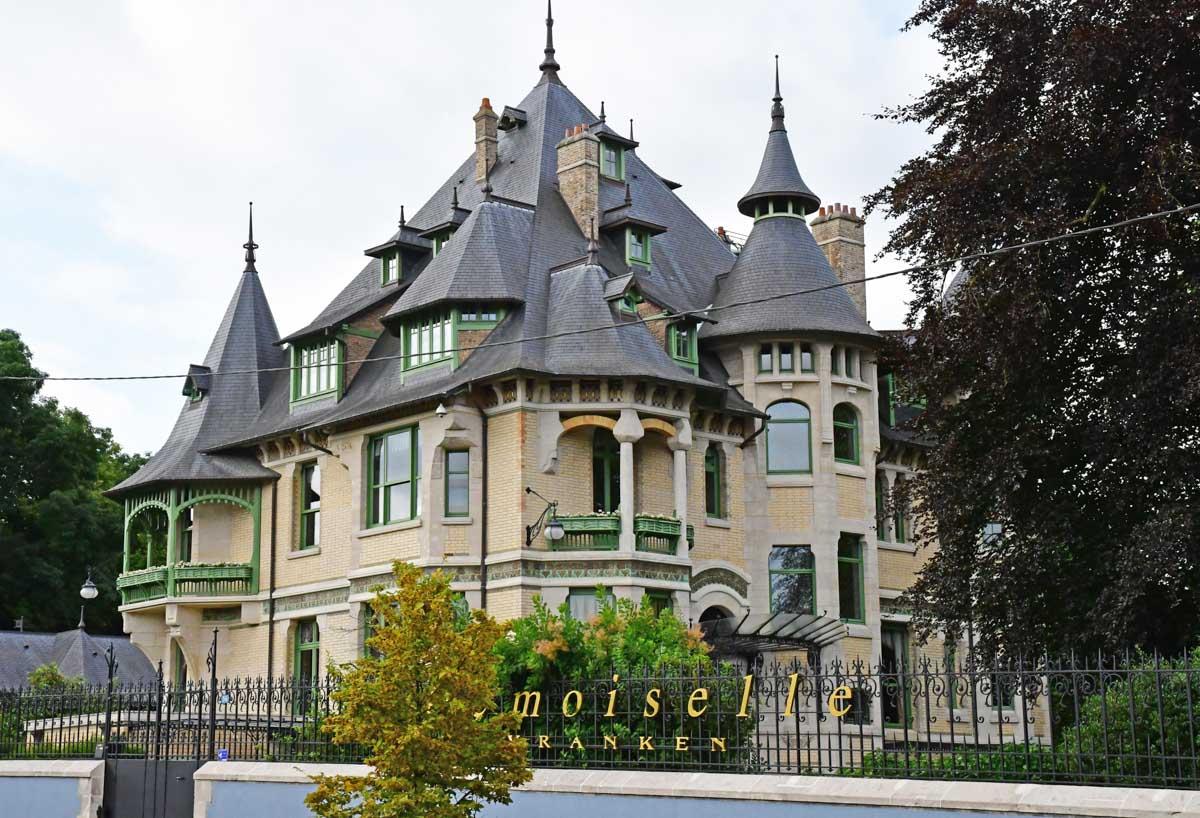
Domaine Vranken Pommery
5 place du Général Gouraud, 51100 Reims
Tour with tasting, prices starting at 27 euros per person
Plan your tour of the cellars on the website
5. The Taittinger champagne Cellars | The most gothic
To fully appreciate the beauty of the Taittinger champagne cellars, we need to go back to the Middle Ages. It was above these galleries that, at the instigation of the Counts of Champagne, the Abbey of Saint-Nicaise was built. In its network of galleries, enriched with crypts and vaults, the Benedictine monks preserved the Champagne wines they traded. Destroyed during the French Revolution, superb remains of the Abbey were nevertheless preserved in the basement, where the Taittinger Champagne cellars are located today.
During your visit, you'll be able to contemplate admirable reminders of the Abbaye Saint-Nicaise's existence, such as the sumptuous wrought-iron gateway that once opened onto the abbey gardens, and discover timeless gems such as the abbey's old secret passages and sculpted niches. You'll also see traces of soldiers and civilians from the First World War, before ending your epic journey on the old bottles used by the monks and preserved here as jewel cases for the house's prestige cuvée.
Champagne Taittinger
9 Place Saint-Nicaise, 51100 Reims
Guided tour with tasting from €27 per person.


6. The Champagne Ruinart's chalk pits | The most typical
The only chalk pits to be classified by the French government as " natural sites and monuments of an artistic, historical, scientific or picturesque nature ", the cellars of Maison Ruinart (LVMH Group) are a wonderful journey back in time. You first enter a room eight meters below ground, where some of the key stages in champagne production take place, before plunging into the depths to reach a veritable labyrinth, eight kilometers long. Here, vast, immaculately white chalk pits, some as large as cathedrals, are revealed as the tour unfolds.


Ruinart was the first champagne house to store its bottles in the chalk pits of Saint-Nicaise hill in the 18th century, thanks to the flair of Claude Ruinart, son of the founder of the prestigious champagne house. Since then, the chalk pits have been converted into three levels, housing several thousand bottles. One of the highlights of the show is probably the oenotheque, housed in one of the largest pigeonholes and housing the house's rarest bottles. Still inaccessible, this space can be discovered thanks to the virtual tour inaugurated last year.
Champagne Ruinart
4 Rue des Crayères, 51100 Reims
Guided tour with tasting of two cuvées, €90 per person
7. The Veuve Clicquot's chalk pits | The largest
Also located beneath the Saint-Nicaise mound in the heart of Champagne, the chalk pits of the Veuve Clicquot (LVMH) house are well worth a visit, if only for their sheer size. Consisting of a vast network of underground galleries, these pits date back to medieval times and stretch for almost 24 kilometers, making them the largest of all the champagne houses in Reims!
Acquired in 1909, the cellars still bear the mark of the different generations of quarrymen, cellarmen and soldiers who have passed through their walls over the years. A variety of tours are available to fully appreciate the beauty of this immense labyrinth, structured around an immersive, interactive itinerary. They conclude with a tasting of one or more of the House's emblematic cuvées, and allow you to learn more about the incredible history of Veuve Clicquot, led by one of the first business women of modern times!

Champagne Veuve Clicquot
1 Rue Albert Thomas, 51100 Reims
Guided tour with tasting, prices from €30 per person.
8. The Leclerc-Briant champagne Cellars | The biodynamic pioneer
Located high above Épernay, the Leclerc-Briant champagne house backs onto a tiny parcel of Chardonnay, cultivated biodynamically since it was planted by the Leclerc-Briant family in the 1960s. By appointment only, you can visit the presses, the contemporary barrel cellars, the vats and the 35-meter-deep cellars. Tours are followed by tastings of emblematic cuvées.
Good to know? The Leclerc-Briant family also owns a beautiful 18th-century guest house, 25bis by Leclerc-Briant, on the Avenue de Champagne in Épernay.


Champagne Leclerc-Briant
67 Chemin de la Chaude Ruelle, 51200 Épernay
Guided tour with tasting of two cuvées, prices from €50 per person.
9. The Franck Bonville champagne Cellars | The specialist of Blancs de blancs Grand Crus d'Avize
The Côte des Blancs is a wine-growing region characterized by the extreme purity of its chalk, named after the grape variety it bears, chardonnay, the only white grape variety in Champagne. Franck Bonville is one of the few family-run wineries to have specialized in the Blanc de Blancs Grand Cru d'Avize terroir, and has done so for four generations of winemakers. Franck Bonville's galleries date back to the mid-19th century, and house the company's various cuvées, the most prestigious of which are aged here for five to six years. A not-to-be-missed visit to familiarize yourself with these singular wines!
Champagne Franck Bonville
9 Rue Pasteur, 51190 Avize


10. Le Gallais champagne Cellars | A family estate to visit in the Marne Valley
Five generations after her grandfather acquired the land in the Marne Valley, then owned by Madame Veuve Clicquot, Charlotte Le Gallais still manages the seven parcels of the family estate. The press, cellars and winery are all located within the vineyard, and from the terrace you can enjoy a 180° view of the family vineyard and the superb Château de Boursault.

Champagne Le Gallais
2 Rue Maurice Gilbert, 51480 Boursault
Guided tour with tasting, prices from €15 per person.
11. The Maison Penet champagne Cellars | A terroir champagne in vaulted cellars
It was in the early 1930s that Désiré and Gilbert Penet, already familiar with vineyard work, decided to create their first sparkling wines. Their son succeeded them and acquired a superb 19th-century manor house, including one of Verzy's most majestic vaulted cellars, on the northern slopes of the Reims mountain, in which the bottles of Maison Penet are still aged to this day by Alexandre, a worthy representative of the fourth generation of winegrowers. A variety of tours are available, including the vineyard and cellar tour, which takes in the superb vaulted cellars!

Maison Penet
12 Rue Gambetta, 51380 Verzy
Where to sleep and eat in Champagne?
Our recommendations
1. Royal Champagne Hôtel & Spa | A world-class hotel near Épernay
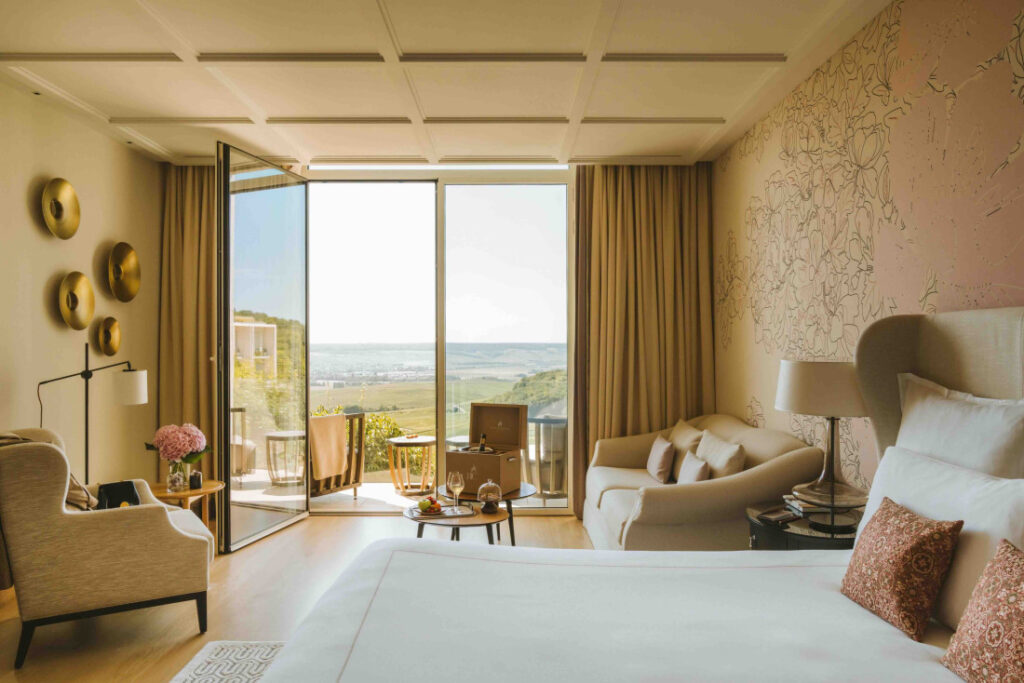
The pitch? This former coaching inn converted into a five-star hotel enjoys a privileged location in the heart of the Champagne vineyards. The contemporary building of Royal Champagne overlooks the vineyards, revealing a panoramic view of the valley. Its 47 rooms and suites open onto large bay windows, overlooking the vineyards directly, with no facing walls. Pastel and acid tones, natural materials combining wood and stone, and nods to the surrounding vineyards adorn the interiors of the hotel and rooms, designed by decorator Sybille de Margerie. All suites have terraces overlooking the vines, ideal for enjoying a glass of champagne as the light fades.

Well-being? The relaxing atmosphere invites contemplation, as does the superb 1,500 m2 spa, with nine treatment rooms, two pools (one indoor and one outdoor), a hammam, a sauna and a whirlpool. Like the rest of the hotel, the swimming pool opens onto a 360° view of the vineyards, and even has a solarium terrace where you can soak up the sunshine while admiring the vineyards, as well as a yoga studio and a fitness center.
Gastronomy? Another highlight of this luxury hotel is chef Christophe Raoux's Michelin-starred Le Royal restaurant, whose creations can be enjoyed under the restaurant's crystal chandeliers or, weather permitting, on the terrace overlooking the vineyards.
Royal Champagne Hôtel & Spa
47 keys from €949 per night.
9 Rue de la République, 51160 Champillon
2. Les Avisés | The hotel-restaurant of the legendary Domaine Jacques Selosse
Part of the small Jacques Selosse estate, considered one of the world's finest champagne producers, Les Avisés hotel-restaurant boasts ten spacious rooms, nestled in the hills above Avize in the Marne region. More a guest house than a hotel, guests enjoy the fireplace in the living room on winter afternoons, and the quality of the cuisine, orchestrated by Stéphane and Nathalie Rossillon, two former employees of Anne-Sophie Pic.
Guests can also take part in "aperitif meetings", where they can chat with Anselme Selosse, son of the founder, and taste some of the house wines. A charming address in Champagne, ideal for a bistronomic lunch or a stay in a chic, intimate atmosphere.

Les Avisés
10 keys, from 240€ per night during the off-season
59 Rue de Cramant, 51190 Avize