This site uses cookies so that we can provide you with the best possible user experience. Cookie information is stored in your browser and performs functions such as recognizing you when you return to our website and helping our team understand which areas of the site you find most interesting and useful.
The Best Restaurants in Alsace Among the Michelin-Starred Establishments
1. Villa René Lalique | Wingen-sur-Moder
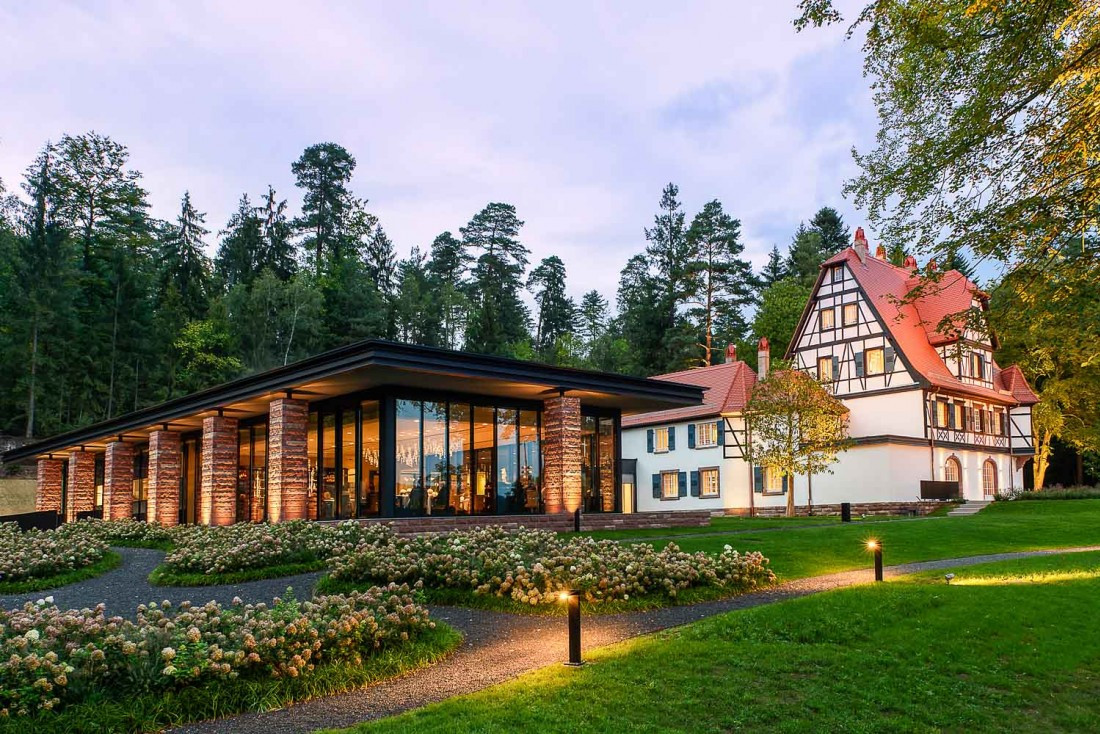
The setting: Built in 1920 by René Lalique, a renowned Art Nouveau jeweler and Art Deco master glassmaker, the Villa René Lalique is now a 5-star hotel, under the direction of interior designers Lady Tina Green and Pietro Mingarelli, creators of the “Lalique Maison” collection. Completely renovated, the Villa has managed to preserve the spirit its founder imbued it with. It features six suites, each a tribute to the designer, and a light-filled restaurant designed by Swiss architect Mario Botta. The building incorporates sandstone columns from the Vosges and large floor-to-ceiling windows that open onto the natural surroundings. Set in the heart of a six-hectare park, this glass-walled gem blends seamlessly into the landscape of the Northern Vosges. The dining room embraces a minimalist aesthetic in black and white, with subtle nods to the brand’s designs.
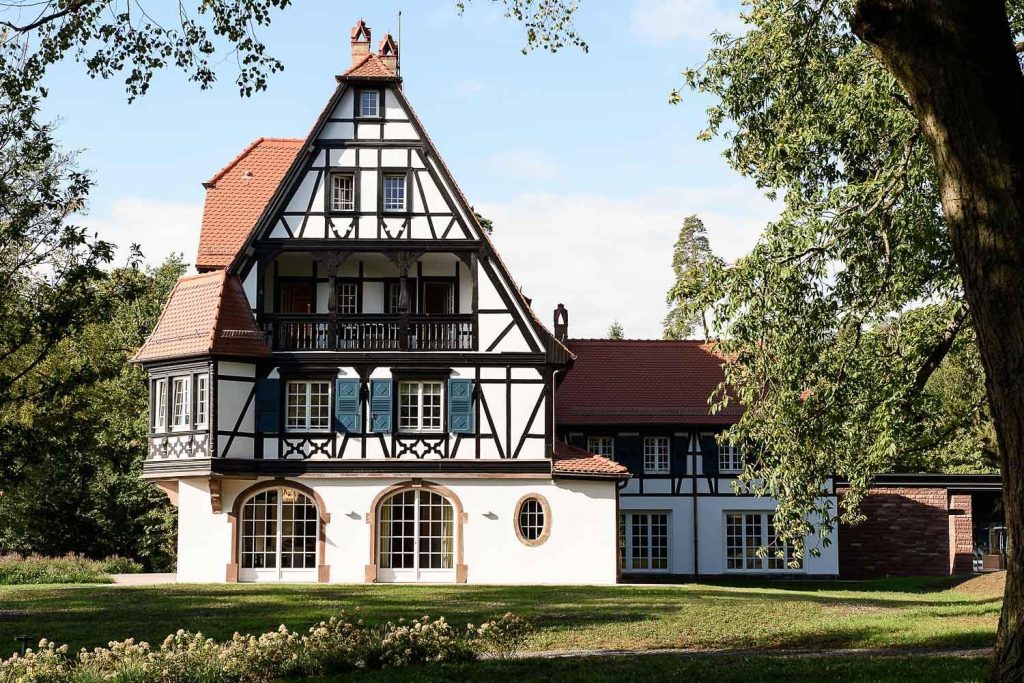
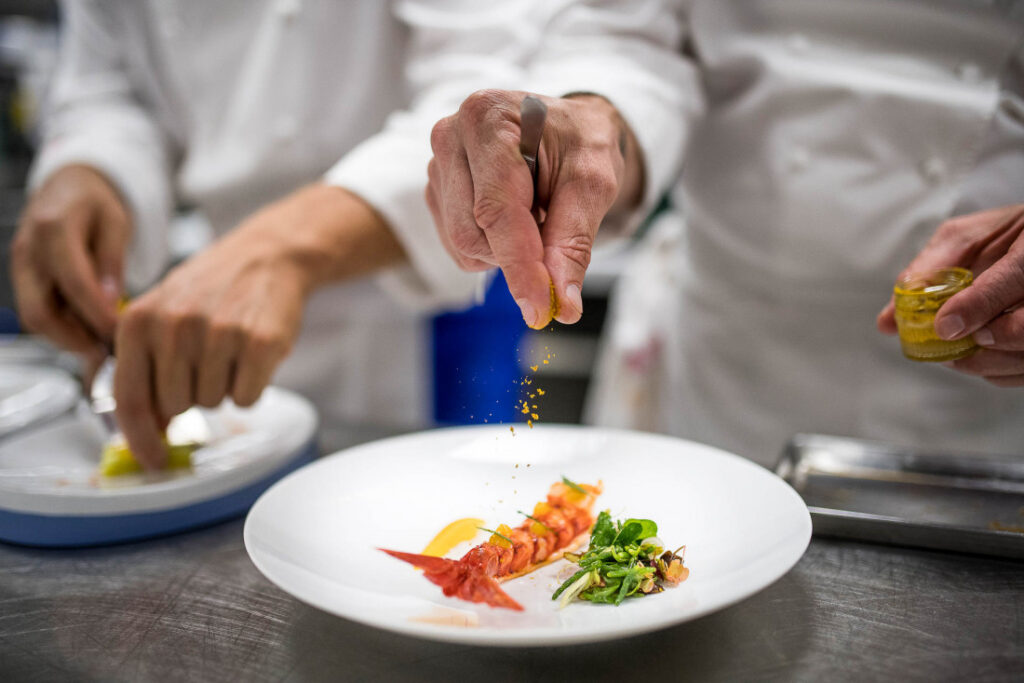
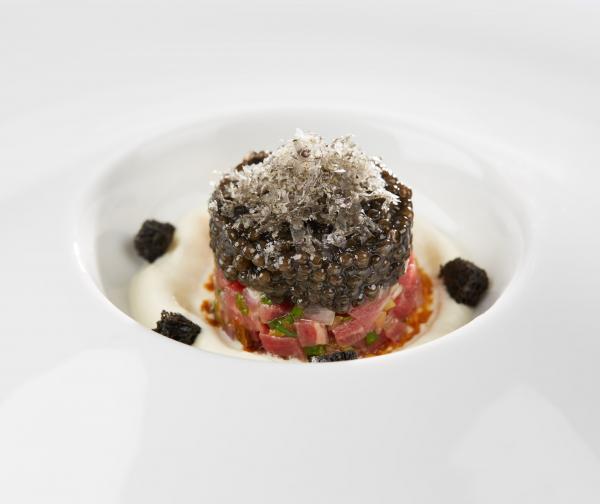
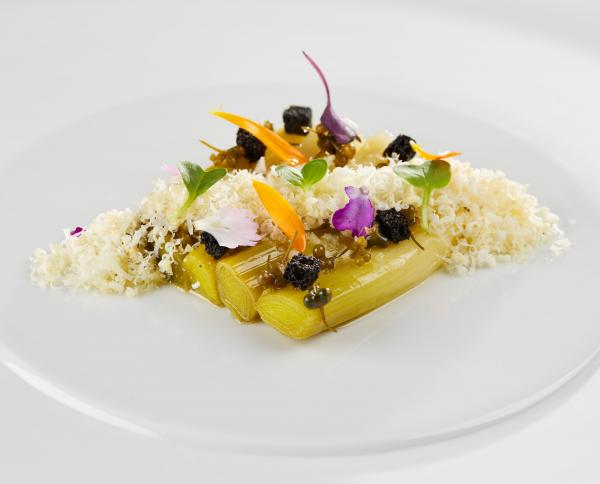
In the kitchen? At the stove is Austrian chef Paul Stradner. He was a two-star chef at the Brenners Park-Hotel & Spa in Baden-Baden before joining the Villa in October 2017. The restaurant has held two Michelin stars since February 1, 2016, and the Michelin Guide reaffirmed its two-star rating in 2026. Drawing on his experiences in Austria and Germany, Paul Stradner’s cuisine is creative, intense, and vibrant. It highlights local ingredients and blends them with personal memories. The truffle potato emulsion is one of his signature dishes. Other highlights include lobster with radishes, tarragon, and fir tree mousse, or pigeon with multicolored carrots, kumquats, and cumin sauce. On the dessert side, pastry chef Jonathan Bunel, who joined the team in October 2024, draws inspiration from both French tradition and more modern influences. The Michelin Guide specifically praises the pastry chef’s talent. As the showcase of Maison Lalique, Villa René Lalique undoubtedly offers one of the most accomplished gastronomic experiences in Alsace and beyond.
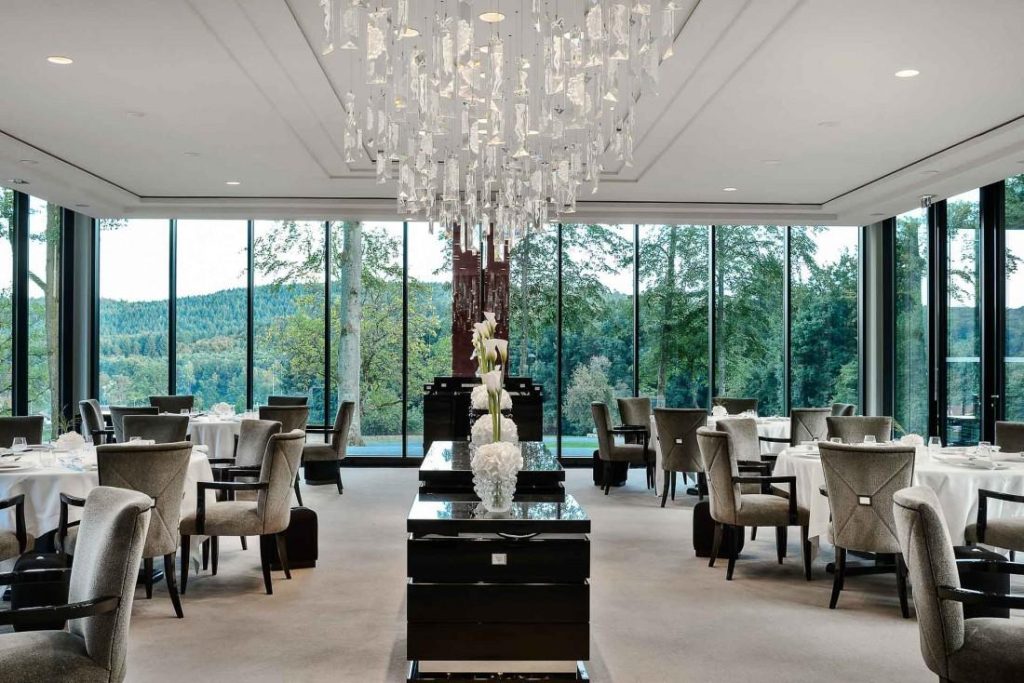
Good to know: The food-and-wine pairings are curated by Romain Iltis, named Best Sommelier of France in 2012 and Best Craftsman of France in 2015. The wine cellar, also designed by Mario Botta, is worth a visit in its own right. With 60,000 bottles, it ranks among the finest in Europe and showcases the best wines of Alsace. The adjoining hotel, opulent and nestled in nature, is ideal for a romantic weekend in Alsace. A visit to the nearby Lalique Museum, designed by Jean-Michel Wilmotte, is a must and is also worth the trip.
Villa René Lalique
6 suites, rates starting at 305€ per night.
18 rue Bellevue, 67290 Wingen-sur-Moder
Official website
2. La Table d’Olivier Nasti | Hôtel Le Chambard, Kaysersberg
A two-star restaurant at Le Chambard Relais & Châteaux hotel, La Table d’Olivier Nasti is situated in the heart of the charming village of Kaysersberg. Ranked among the most beautiful luxury hotels in Alsace, its 33 rooms and 6 suites were completely renovated in 2020. The restaurant has also been entirely redesigned. The atmosphere celebrates nature, a theme so dear to Olivier Nasti’s cuisine. A century-old Alsatian beam on the ceiling, wood-paneled walls, handcrafted furniture, and wildlife-inspired décor reflect the chef’s passion for hunting, local produce, and the surrounding landscapes.
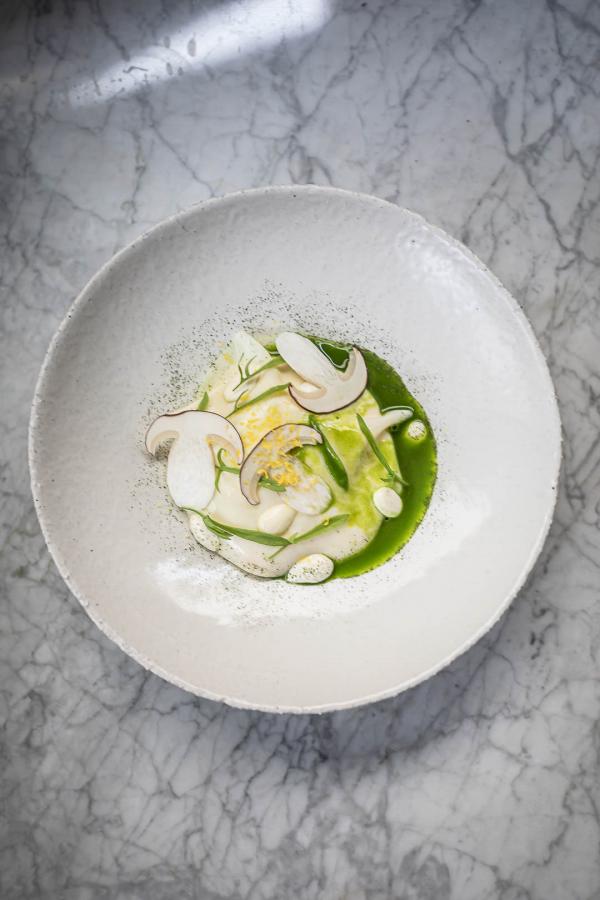
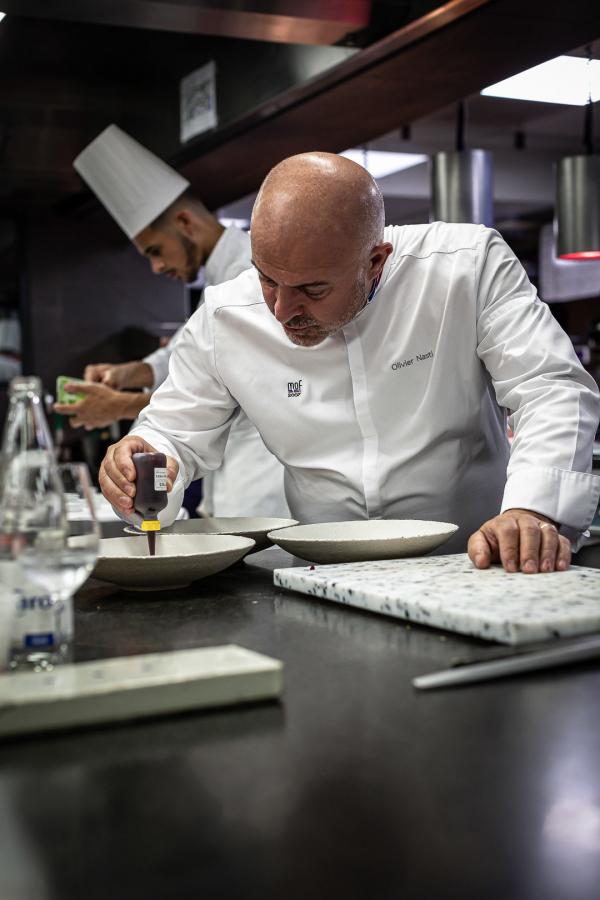
In the kitchen, guests can watch the chef and his team hard at work behind the large floor-to-ceiling windows. A recipient of the Meilleur Ouvrier de France award (2007), Olivier Nasti, alongside his executive chef Mathieu Silvestre, creates signature dishes that are inventive and deeply rooted in the local terroir. In collaboration with the region’s finest producers, the chef offers gourmet plates that are refined and precise. His menus “L’Éveil des Bois” and “Hors des Sentiers” invite guests to discover a wild and gourmet side of Alsace, with particular attention paid to cooking methods, textures, and sauces. Game, morels from the Vosges, foie gras, and mountain Arctic char take center stage in his repertoire. Among his signature creations, the Arctic char “cooked in beeswax”, served with a warm vinaigrette made with honey and fir oil, showcases his focus on the region’s flavors.
La Table d'Olivier Nasti - Hôtel Le Chambard
39 rooms, rates starting at 220 euros per night
9–13, rue du Général de Gaulle, Kaysersberg
3. L’Auberge de l’Ill | Hôtel des Berges, Illhaeusern
A family-run establishment with a well-established reputation, the Auberge de l’Ill has been run by the same family for over 150 years. It all began in 1878, when Marc Haeberlin’s great-grandparents opened the Auberge de l’Arbre Vert. Destroyed during World War II, it was reborn as the Auberge de l’Ill. Now run by the Haeberlin-Baumann family, it is situated in an enchanting setting along the riverbank, with the Vosges Mountains as a backdrop. The veranda, which opens onto the garden, allows guests to enjoy the surrounding scenery. On the ceiling, the nearby river is reflected in large pools of hammered stainless steel, creating a delicate play of light. The dining room features light tones and a poetic atmosphere, with its Hermès prints and origami hummingbirds. "La pièce alsacienne”, meanwhile, evokes the surrounding nature. More intimate, the dovecote, with its wooden beams, invites a warm, convivial atmosphere. On sunny days, guests enjoy an aperitif in the garden before sitting down to dinner.
Marc Haeberlin succeeded his father, Paul, continuing the family’s culinary legacy. He trained at the finest Michelin-starred restaurants, notably Bocuse, Lasserre, and Troisgros, before returning home in 1976. He first joined the kitchen staff as a commis, then gradually took the reins of the kitchen. This iconic regional chef takes pleasure in bringing his father’s creations to life. Among the dishes featured are goose foie gras served by the spoonful, the “Paul Haeberlin” frog mousseline, and the legendary salmon soufflé. At the same time, he is developing a more personal and contemporary vision of haute cuisine, as exemplified by red mullet served with a chorizo and Espelette pepper sauce, accompanied by polenta. For dessert, Grandmother Haeberlin’s vacherin is reimagined by pastry chef Pascal Hainigue.
2_0.jpg?itok=Fp97ZSvn "Le restaurant gastronomique de l’Hôtel des Berges de la famille Haeberlin © DR")
Good to know? Awarded two Michelin stars, L'Auberge de l’Ill held three stars continuously from 1967 to 2019. This is one of the longest streaks in the guide’s history. Marc Haeberlin is also one of the ten Gault&Millau Academicians, the guide’s highest distinction, reserved for a handful of legendary chefs. To extend the experience, the neighboring Hôtel des Berges offers 18 rooms and suites along the river, as well as an 800 m² spa.
L’Auberge de l’Ill at Hôtel des Berges
2, rue de Collonges au Mont d'Or, Illhaeusern
4. Alchémille | Kaysersberg
The raw, minimalist decor showcases Jérôme Jaegle’s purist cuisine. Unfinished wooden tables, large picture windows, and subdued tones lend the space a Zen-like atmosphere, where the plates take center stage. And what dishes they are! Part farmer, part chef, Jérôme Jaegle draws his inspiration from the seasons and whatever nature has to offer.

His five gardens (managed by a gardener) are a source of endless creativity: fruits, vegetables, and herbs find their way directly onto the plate, prepared in a way that highlights the essence of each ingredient. Each season allows him to fully harness the potential of the Alsatian terroir, with a particular focus on plant-based ingredients. His creations are presented as three culinary “journeys.”
Alchémille
53, route de Lapoutroie, Kaysersberg
5. Auberge Chez Guth | Steige
On a trip through Alsace, the Auberge Chez Guth is a must-visit, having held a Michelin star since 2025. Overlooking the Val de Villé, this farmhouse inn offers a truly breathtaking view of the Ban de la Roche region. The renovated, light-filled dining room, with its all-wood interior, echoes the surrounding nature, and the understated decor allows guests to focus their attention on the panoramic view.

In the kitchen, Chef Yannick Guth—who previously worked with Sébastien Sévellec and Emmanuel Renaut in Megève—draws inspiration from the produce of the surrounding countryside to create innovative and surprising dishes. The menus are organized by “altitude", ranging from “Altitude 286”—a three-course meal—to “Altitude 534”, an eight-course meal. Surprising and daring, this passionate chef’s creations reveal pairings that are always precise and unexpected. Wines can be enjoyed as part of the pairings for each menu or selected à la carte.
Auberge Chez Guth
5A, rue du Bas des Monts, Steige
The Best Winstubs or Traditional Restaurants in the Alsace Region
6. La Stub | Yona
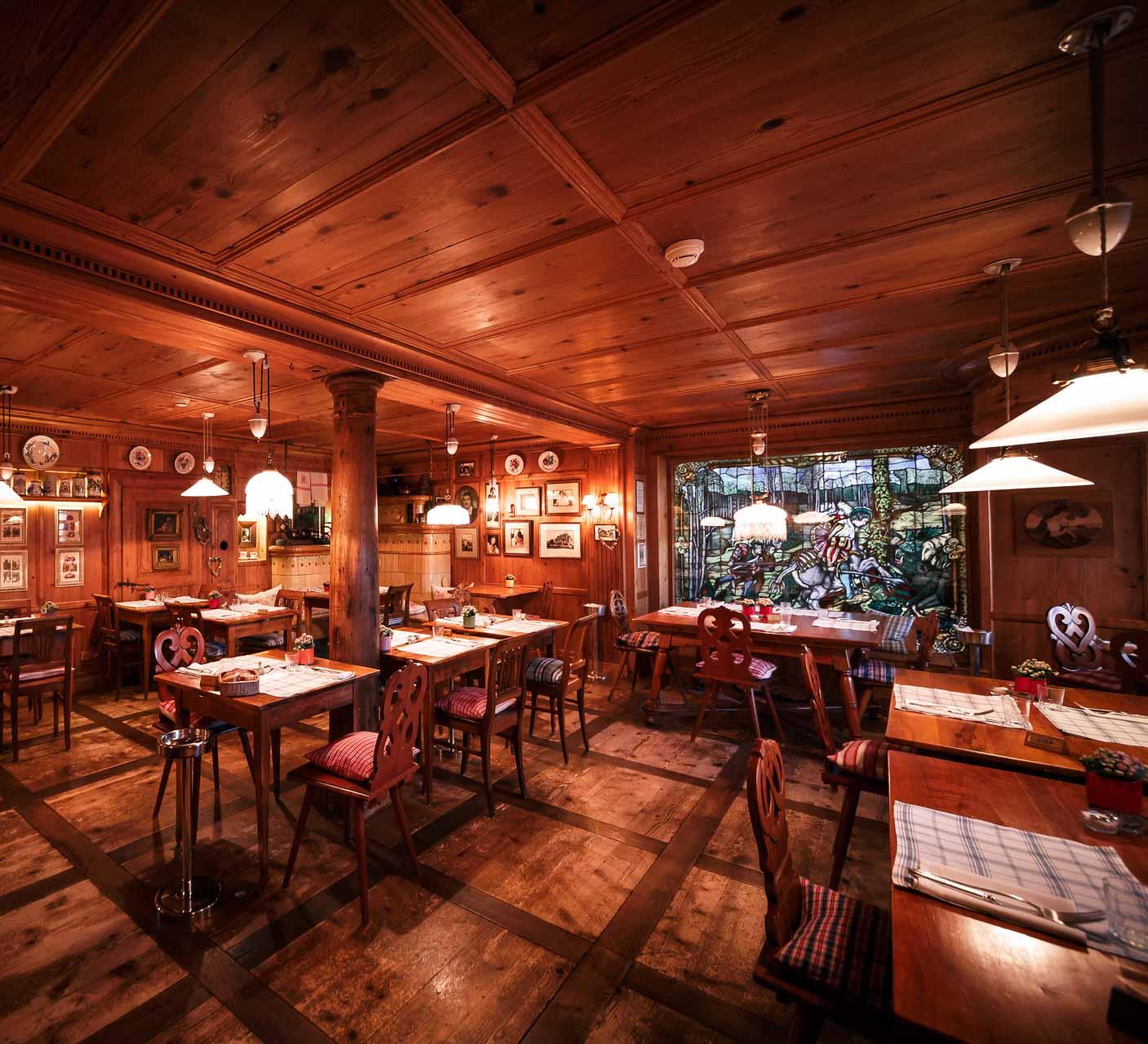
The walls of this winstub—part of the Yona (formerly the Parc Hôtel d’Obernai)—are adorned with carved wooden decor sourced from old farms in the Ried region, a collection of antique coffee grinders, and portraits of the establishment’s matriarch, Mamy Kuntz. Executive Chef Cyril Bonnard and his partner, Pastry Chef Marie Wucher, put a contemporary spin on classic dishes from days gone by: so no sauerkraut here, but rather a “Maatjes” herring tartare with horseradish cream or Schniederspättle with mushrooms and veal jus. The duo draws on their experience working at some of the finest establishments (she with Christophe Michalak, he with Pierre Gagnaire, and both with Joël Robuchon and Yannick Alléno) to reinvent traditional Alsatian dishes throughout the seasons.
La Stub at YONA
169, route d'Ottrott, Obernai
7. Le Clou | Strasbourg
A well-known spot among Strasbourg locals, Le Clou is a must-visit for anyone looking to experience the authentic atmosphere of a winstub. Warm wood paneling, Ribeauvillé tablecloths, antique tableware, traditional decorative items… This venerable establishment owes its name to its former owner, Mr. Nagel (“le clou” in German), and in the 1980s and 1990s welcomed many celebrities visiting Strasbourg incognito.
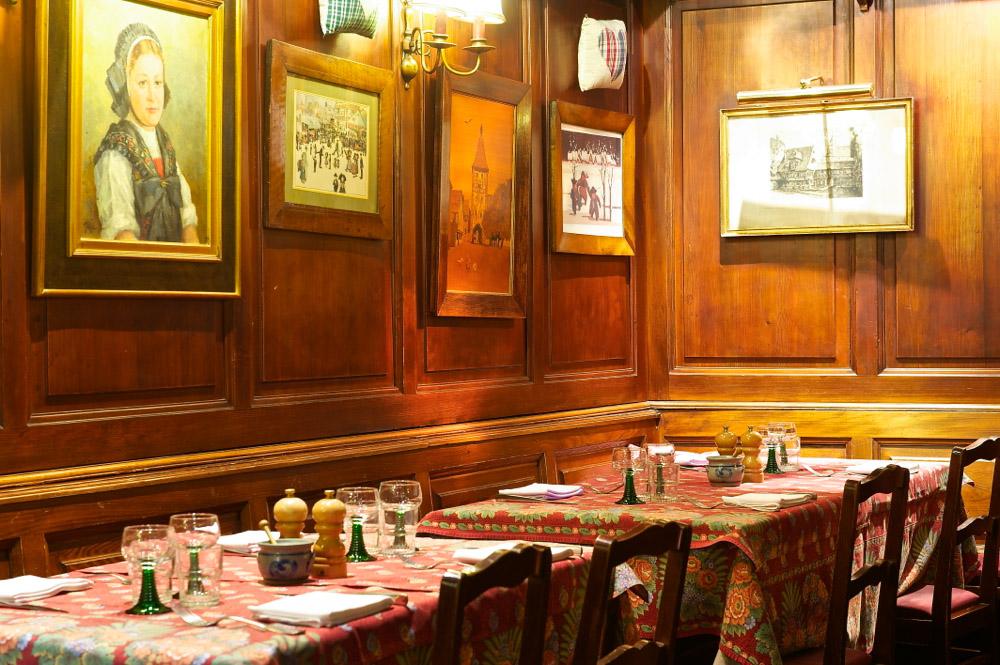
The restaurant serves authentic, down-to-earth cuisine that follows a classic recipe without a single misstep. You’ll find all the Alsatian classics here: traditional presskopf, escargots, ham en croûte with Pinot Noir sauce, choucroute garnie, of course, as well as prune soup and gingerbread ice cream. The perfect spot to savor authentic Alsatian flavors.
Le Clou
3, rue du Chaudron, Strasbourg
8. La Winstub at Le Chambard | Kaysersberg
In addition to its two-Michelin-starred restaurant, the Le Chambard hotel and restaurant also features a winstub, where the cuisine is more traditional, featuring the classics of Alsatian gastronomy. The decor mirrors the food—authentic and perfect for sharing. Checkered tablecloths, carved chairs, and large communal tables immediately set the tone: here, warmth and sincerity are the watchwords.
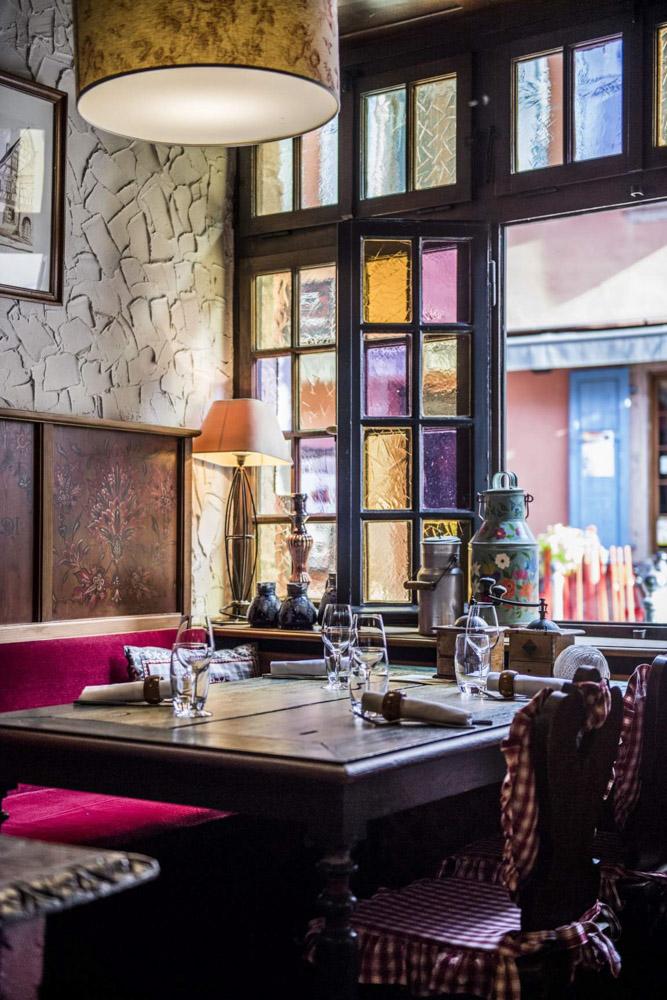
Traditional Alsatian dishes are given a modern twist by Olivier Nasti. Regional specialties are, of course, front and center, including snails, pikeperch, and pike, as well as meats and Munster cheese. The “Terroir” menu offers a great overview of local specialties, including a “choucroute royale” served with its five accompaniments, trout in matelote sauce, and the traditional iced Kougelhopf.
La Winstub at Le Chambard
9–13 Rue du Général de Gaulle, Kaysersberg
Other Great Restaurants in Alsace
9. Au Trotthus | Riquewihr
Here, you’ll dine in a 16th-century house steeped in history: the west wall was once part of Riquewihr’s old ramparts, the exposed beams are over 500 years old, and the imposing antique wine press still stands proudly in the center of the dining room. Combining a modern take on Alsatian tradition with original creations, Myriam and Pierre offer cuisine for true food lovers. On the menu: rabbit shoulder with old-fashioned mustard served with spaetzle, a parmentier made with shredded Alsatian beef, and duck sauerkraut. The menu also features vegetarian options, such as Maultaschen with peas and pumpkin seeds, served with an onion sauce and lovage oil.

Au Trotthus
9, rue des Juifs, Riquewhir
10. The Historic Brasserie at La Maison des Têtes | Colmar
This brasserie is the counterpart to the gourmet restaurant La Maison des Têtes in Colmar, a sumptuous Renaissance mansion converted into a 5-star hotel. Inside, you’ll find a subtle blend of Alsatian authenticity and contemporary design, combining wood paneling, an antique wood-burning stove, period stained-glass windows, and stylish furniture. On sunny days, the Brasserie sets up tables in a charming inner courtyard paved with pink Alsatian sandstone. The same beautiful harmony between tradition and modernity is reflected in the dishes.

Typical regional ingredients are showcased in classic dishes of Alsatian cuisine, such as sauerkraut or Baeckeoffe, as well as in lighter, contemporary creations featuring local fish, prime cuts of meat, or seasonal vegetables. Here, you’ll find all the expertise of Michelin-starred chef Éric Girardin, with a particular focus on cooking techniques.
The Historic Brasserie at La Maison des Têtes
19, rue des Têtes, Colmar